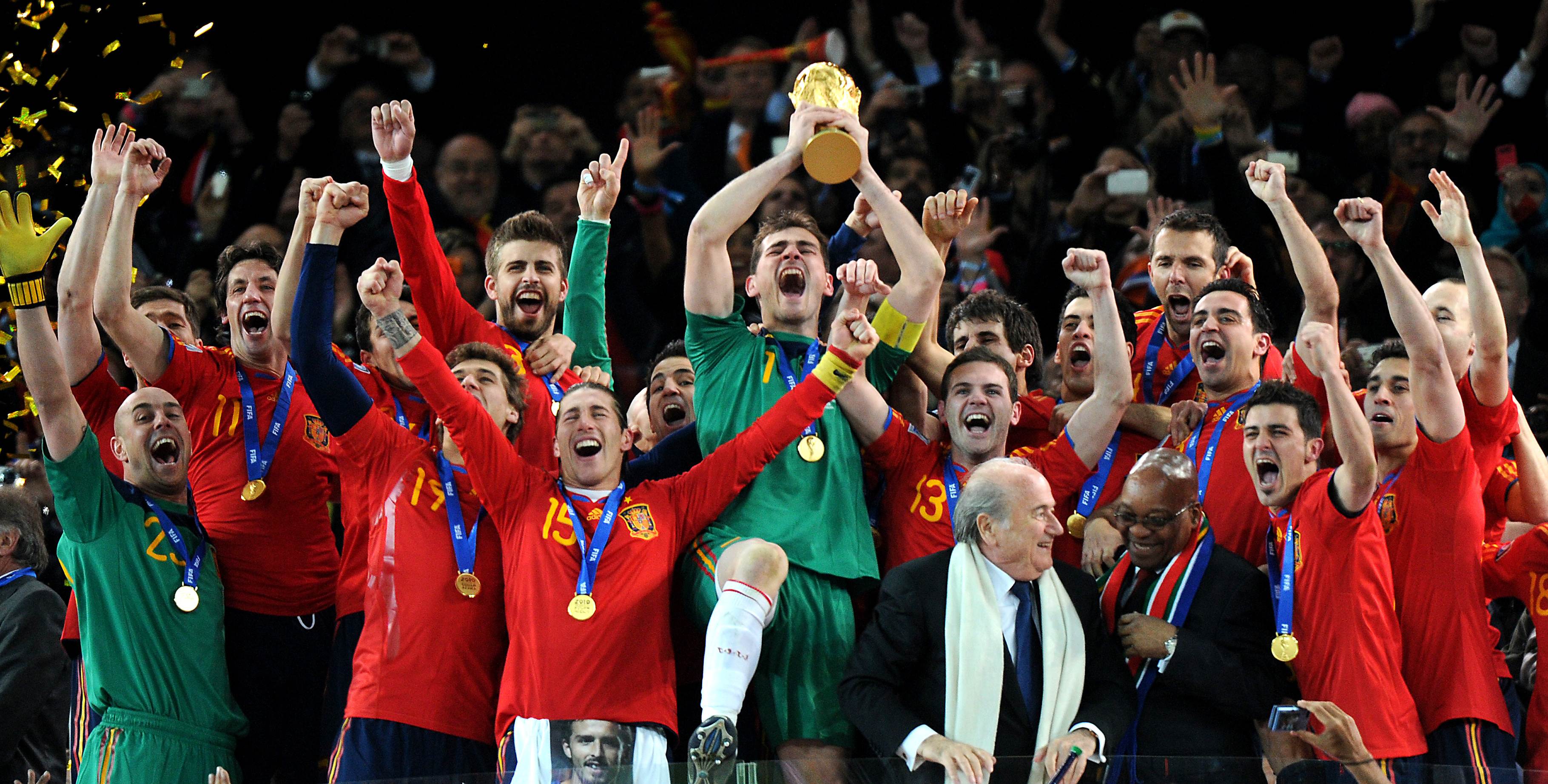
In 2010, the Spanish soccer team won the FIFA World Cup. A miraculous feat on its own, but even more incredible when you realize that 7 of the 11 on the field that day were alums of La Masia. Those seven players (Gerard Piqué, Carles Puyol, Andrés Iniesta, Xavi, Sergio Busquets, Pedro, and Víctor Valdés) have spent most of their lives playing the game they love with the people that they have known since their childhood.
At La Masia players are taught the Blaugrana style of play, characterized by the Tiki-Taka introduced by famed Barça legend Johan Cruyff. This style is based around the idea of ball possession, of players constantly passing and creating a sort of rhythm in their attack. Because of the nature of the Tiki-Taka, it's important for a player to understand their teammates. There is a need for strong cohesion and understanding amongst all those on the pitch. Naturally, you can see why players who have been playing together for years, who know each other better than anyone, and who can understand how each other behaves on the field would be so successful at this style of play.
That's one of the most essential benefits from La Masia: friendship and understanding. When these young boys enter into the academy, they are forced into a whole new world. Becoming close with their fellow academy members strengthens their bond both on and off the pitch. They not only become life long friends but also become a collective unit of players that function as a team more efficiently than any other team. They are bonded together by their passion for the game and the years spent playing it together result in a team that is unstoppable.
So it's not surprising that the Spanish team, with the majority of their players graduates of La Masia, could accomplish one of the greatest achievements in football. These players have known each other for the majority of their lives, and their strategies improved year by year until reaching perfection. La Masia alums are a force on their own, but when placed together on a team they are simply unbeatable.
Marguerite McClary - The concept of having an academy that starts training young boys in order to create a power team in the far future is very foreign to me. I feel like that is a lot of time and pressure for the young boys who commit their lives to the sport of futbol. Although I find the academies to be a foreign and strange concept, it has proven to be effective as we can see from the World Cup championship in 2010. What happens to the boys that spend their young years training to one day be in the Euro League but don't make the cut?
ReplyDeleteThanks for your comment Marguerite! La Masia spends lots of time and money on preparing the kids for university. This is so that the kids that don't make the cut can still go to University after La Masia. You are stressing a concern that many people have about the academies but La Masia has done a good job of addressing this.
DeleteThis comment has been removed by the author.
DeleteThis is definitely a serious concern for boys who go through La Masia. It's nice to see that these academies are dedicated to creating a backup plan for players if they do not make it into the professional leagues. Do you think that they do enough for players who don't find professional success? Or is it insufficient for a realistic education and future?
DeleteThroughout my sports experiences, I have realized that the teams I have been on had the most success when the bond between the teammates were the strongest. Also, it just makes the sport more enjoyable to play. In soccer especially, if you don't work well with the people around you, it is hard to communicate or formulate plays. For Spain it must have made winning the FIFA World Cup that much more special having lifelong friends by their side!-Emily Migliorini
ReplyDeleteI think one can easily see how relationships that are formed early on in athletes athletic careers helps how they play together tremendously. Forming strong bonds with players allows players to feel comfortable with each other, form bonds, and know their role on the team. When I see the statistic that 7 of 11 of the players on the field were alums of La Masia I am not surprised that they played well together. Also, I think this makes it more of an enjoyable experience for the players on the team which can help motivate players to play well. Players get more excited when they play with players that they like. For example, one can see this in the NBA today. Dwayne Wade just left the Bulls to join the Cavaliers so he could reunite with LeBron James. LeBron James loves Dwayne Wade and constantly makes comments how well they play together. James and Wade's relationship started by playing in the past with each other and their relationship off the court. James and Wade's strong bond led them to win 3 NBA championships in the past with the Miami Heat and they are hoping do add another one with the Cleveland Cavaliers this year. This shows how having close relationships with the players on your team, no matter what the sport, helps players win.
ReplyDelete- Brendan Feehan